Christopher Blake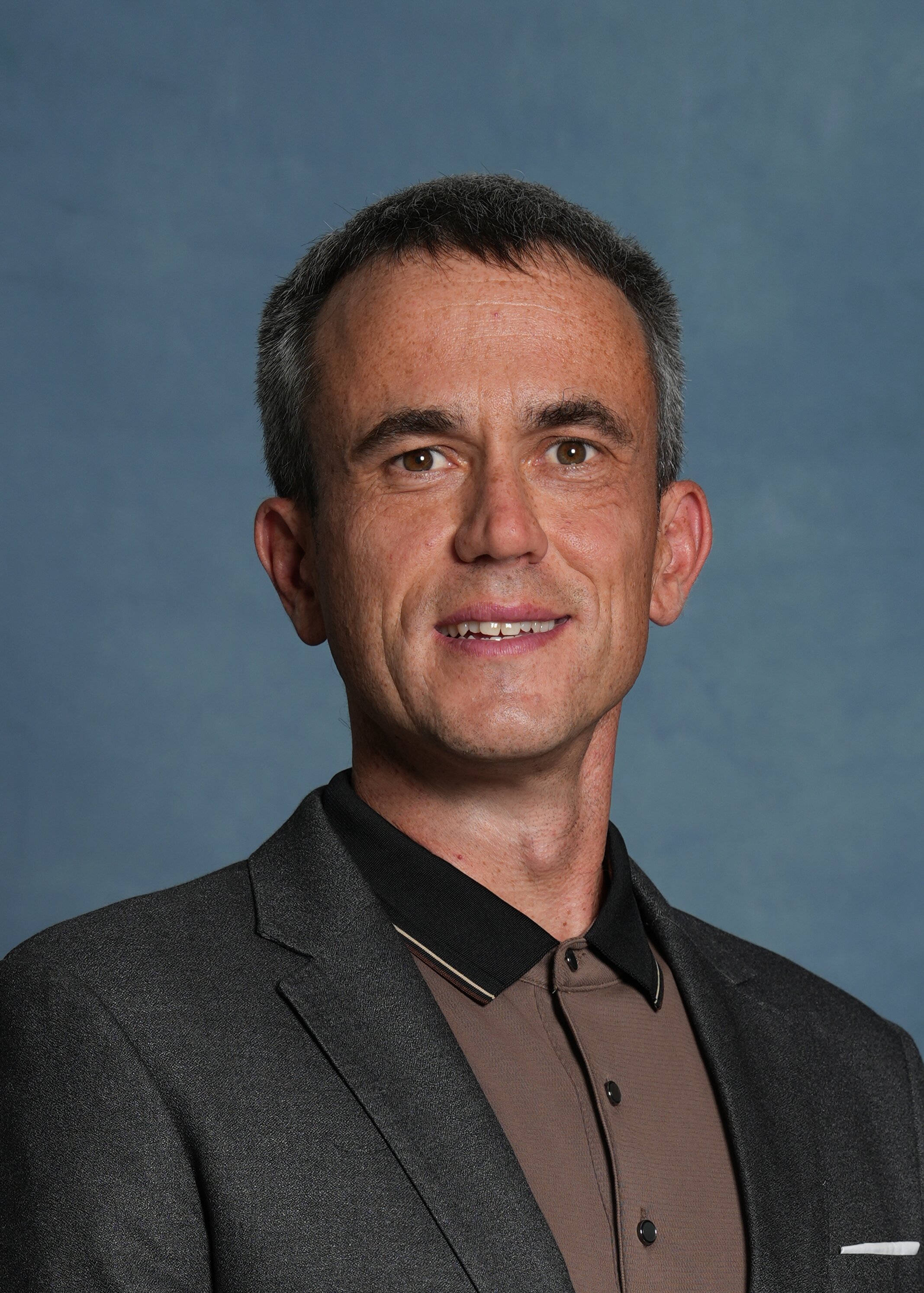
职务:Assistant professor
邮箱:christopher.blake@gbu.edu.cn
【科研领域】
Information theory, blockchains, fundamental limits of computation.
【主要成果】
Christopher has proven a number of fundamental results in computation and information theory. In his PhD, he discovered tight upper and lower bounds on the energy of error control coding circuits. Thus, his work characterizes the fundamental computational limits of digital communication in the physical universe. This work also informs the development of specialized digital circuits that are more energy efficient.
Specifically, Christopher considered a type of error control code called Polar Codes. He proved that these codes reach fundamental lower bounds on energy consumption. His work in this area informed the decision to choose polar codes as one of the error control codes used in the 5G standard.
In the area of blockchains, Christopher developed the first protocol called Merged Bitcoin that increases the fundamental security of the protocol by diversifying over mining resources. In this work, he also provided the first simplified rigorous proof of the security of the bitcoin algorithm.
【学习经历】
Christopher Blake received his undergraduate education from the Department of Electrical and Computer Engineering at the University of Toronto. He received his Masters in quantum information theory from the Massachusetts Institute of Technology, and received his PhD on the energy consumption of error control coding circuits from the University of Toronto.
【工作经历】
Before joining Great Bay University, Chris worked at the Royal Bank of Canada, the largest bank in Canada, as a machine learning researcher. During this work he found a connection between his PhD research interest, error control codes, and modern machine learning algorithms. Subsequently, he consulted for a major blockchain and smart contract company, developing mathematical models to understand the weaknesses of modern blockchains. He also helped establish a Canadian-based startup focusing on self-driving snowblowers. He has taught a course at the University of British Columbia Okanagan campus, and also has worked as an independent researcher on the mathematics of blockchain protocols.
【代表性论文】
[1] C. G. Blake and F. R. Kschischang, "Energy Consumption of VLSI Decoders," in IEEE Transactions on Information Theory, vol. 61, no. 6, pp. 3185-3198, June 2015.
[2] C. G. Blake and F. R. Kschischang, "On the VLSI Energy Complexity of LDPC Decoder Circuits," in IEEE Transactions on Information Theory, vol. 63, no. 5, pp. 2781-2795, May 2017.
[3] C. G. Blake and F. R. Kschischang, "Energy, Latency, and Reliability Tradeoffs in Coding Circuits," in IEEE Transactions on Information Theory, vol. 65, no. 2, pp. 935-946, Feb. 2019.
[4] C. G. Blake and F. R. Kschischang, "Upper and Lower Bounds on the Computational Complexity of Polar Encoding and Decoding," in IEEE Transactions on Information Theory, vol. 65, no. 9, pp. 5656-5673, Sept. 2019.